

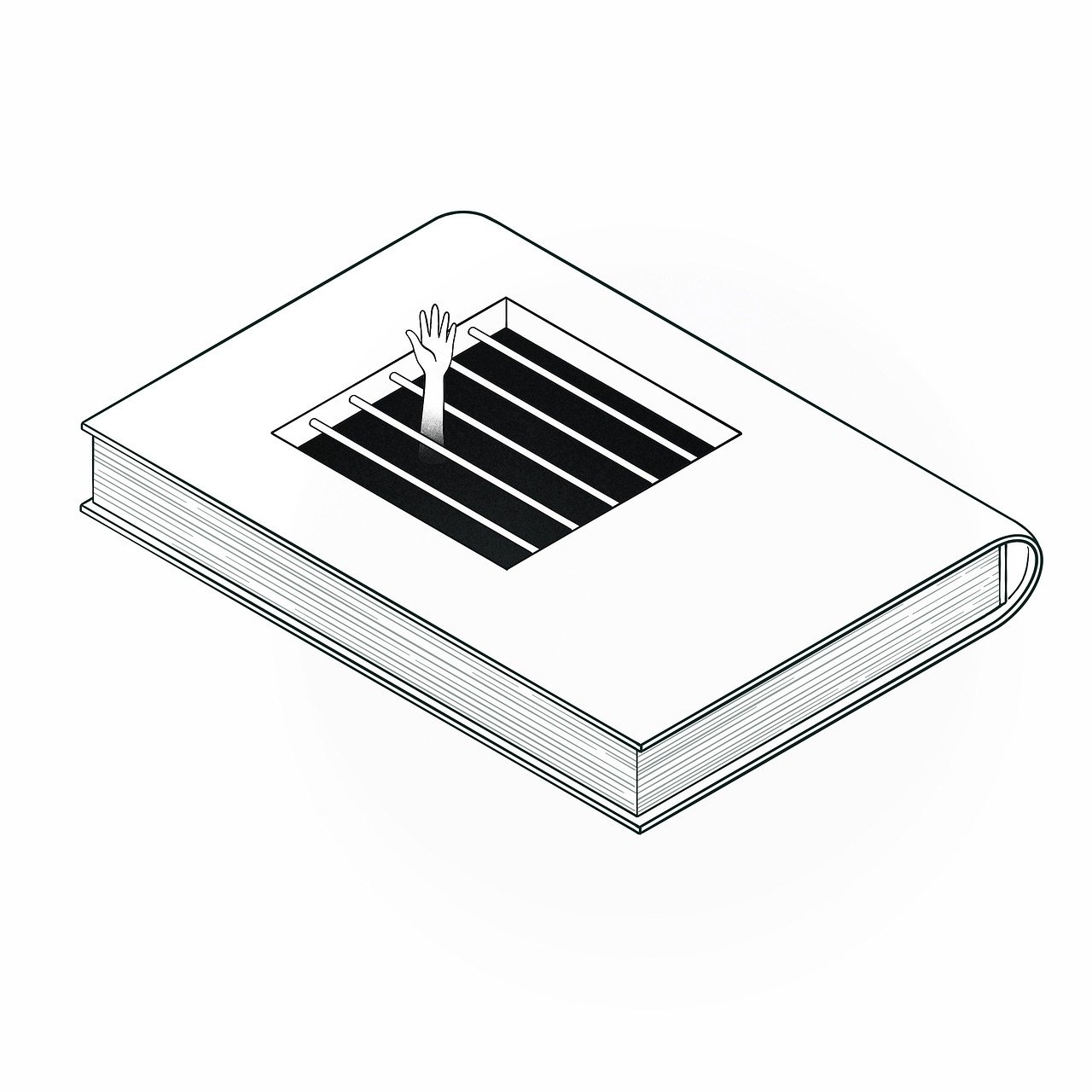
When “good things take time,” it’s because the better result was only possible precisely because there was no rush.
Folks who write are often made to believe that consistency means logging time. And that they should rack up time by clocking in to their writing room daily and manning their writing desk to produce predetermined pages, arbitrary word counts. There are folks who write that have been convinced that their commitment to, their seriousness about, craft is measured by time, and especially by their time-to-completion ratio. How swiftly the novelist generates a book; whether the poet can hastily pen the whole of a poem in a single sitting. Writers have been pressured—by industry, instructors, the advice of famous authors they admire—to make labor of it. (Which is not to say that writing isn’t work, because it is—as it very well should be.)
Showing up everyday can be helpful direction for any number of writers undergoing any number of challenges, including beginner writers building muscle memory, and even advanced writers working toward a deadline. However, the directive of accumulating time as a guarantee for progression has grown ubiquitous—it’s everywhere—as if it were universal.
BETWEEN WORK AND LABOR
Labor cares only for quantified time, where work takes time to ensure quality. Labor’s goal is disappearing time, accumulating and hoarding it; work’s focus is on making time.
STILLNESS & THE WORK’S BODY
The thing of writing—the noun of it—is a breathing thing, expanding and contracting; holding its breath now and again. Now and again it exhales slowly like a leaky air mattress. Sometimes it comes in all at once like a gale. Writing is composed of its own rhythms. Each writing project breathes its own rhythm. What we write comes from the body—through the body. An alive thing, even after the text adheres to the page.
A universal constant: all living things undergo stillness, exhibit periods of silence. What stillness does for the body (of work)—for the work’s body—is inaugurate a space within the zone of writing (the “writing zone”) where the “flow”—what flows—is not anchored to, or dictated by, quantified time. Stillness fathoms time qualitatively.
To rest for a spell, the language ripens like produce on a vine. The plot thickens. Mystery unravels. The dust settles, allowing for clearer vision to assess the landscape. Purpose renews. Character reveals itself—characters find themselves. These, breathing things, expanding. And also contracting, narrowing in focus.
STILLNESS VS. PROCRASTINATION AND HOW TO TELL THE DIFFERENCE
If you sense the inclination to move but refuse the flow—the opportunity to be in flow with the creative force—that’s procrastination. Writing is a body thing—it comes out through the body. Using your mental intellect to thwart what your body knows—and your body knows when to write—that’s procrastination, which is a numbers game: procrastination uses a large amount of quantified time to travel just a short distance. It uses time in such a way that time runs out. It loiters, “killing” time so that the task is jeopardized, can’t be completed, or completed well.
Ask yourself: Are you making time for the work? Are you checking up on your characters? Remaining abreast of what they’ve got brewing? Is the writing right now living, regardless of when you were last at your writing desk?
CREATIVE AUTONOMY
Really, what it’s about is having a sense of autonomy over your creative process, your creative life. Many writers would do well to understand their discipline in relation to how dedicated they are to fulfilling the writing process, instead of completing the writing project. (The former leads to the latter, necessarily, but not vice versa).
Should the season call for routine writing, do that. If you’re at a precipice with this scene or that chapter and showing up at your desk everyday until you move past it gets you over the edge: amen. And if the season allows for something more expansive, more elastic and forgiving, amen, and support those other possibilities.
For more on being in creative (writing) flow, see: Writing the Miracle.