

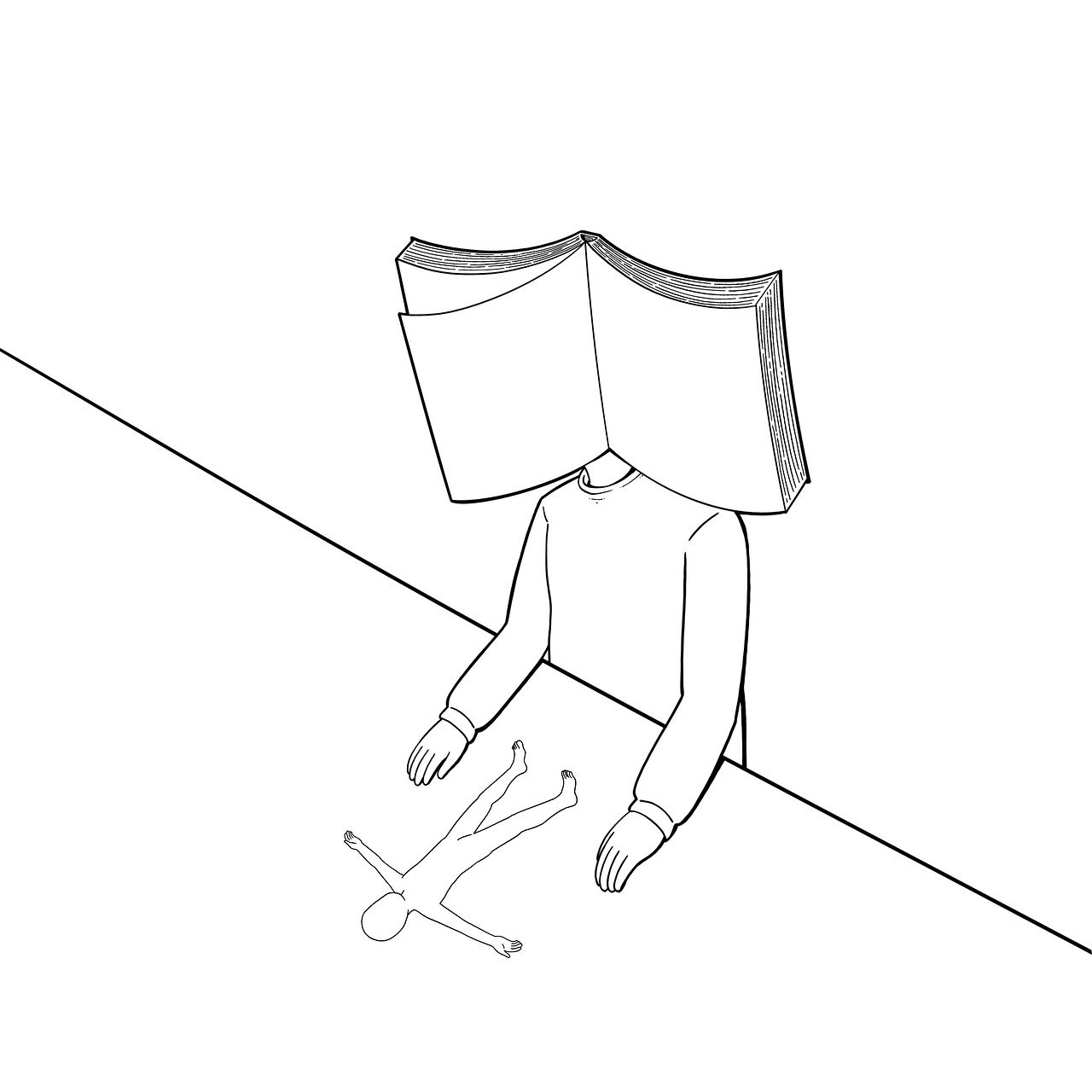
When we talk about believability in creative writing, we often misidentify what and who is at its center.
The fiction writer “makes believe,” willing new worlds and characters into existence. However, the writer does not make belief. The writer is no trickster. There is no deception. After all, the reader knows that they are flipping a page or reading a screen, deciphering text…
Rather than convincing the reader that the fictive world actually exists, the job of the writer is to evidence that the world could exist. This is a small rhetorical turn that shifts the point of focus. It decenters the reader. Repositions the work as the writer’s primary preoccupation. Because what’s most important is the story world, its inhabitants—the characters. (After all, isn’t what we want a “character-driven narrative”?)
The writer’s fidelity is to the story, not to the reader. The reader’s “poetic faith” is theirs and theirs alone. They choose to exercise their belief, or they don’t. The “willing suspension of disbelief for the moment,”* or the sustained faith in the story as the story unfolds, is the reader’s own. Neither the writer nor the writing grants that faith to them.
There is belief and there is nonbelief. The reader has both and utilizes them frequently, daily. There are things that have our belief—ideas and ideals we subscribe to. And there are things (other idea[l]s) we just can’t bring ourselves to give credence to. The writer could take time and effort and energy to gather a list of hypothetical triggers for each potential reader’s nonbelief, concoct remedies for those triggers, plug them all, like holes, into the story. But, what then would become of the story?
The reader lives outside the text. The writer’s primary preoccupation is within the text—is what’s inside the story. Is telling a whole story, even if it’s incomplete. The desire to produce a “finished product" might be what drives the writer to exhaust the story until it seems “complete,” might be what triggers the writer to attempt to address the potential readers’ nonbelief. (And this as a way to secure the reader’s positive belief—to get the reader to believe in the writer’s narrative.)
But! The reader doesn’t have to have belief in the story in order to exercise their faith. The reader doesn’t need to accept the fiction as actual truth, not even for the moment. All the reader needs (to be able) to do is recognize the fictive as having true and accurate tendencies. And a narrative impulse toward wholeness, rather than toward completion, supports the reader in being able to do this.
A WHOLE STORY
Telling any narrative completely, in its entirety, requires the unique perspective of every character involved; requires comprehensive backstories that make sense of each character’s (re)actions; every moment of every event—every moment in between events—accounted for; aftermaths galore (because no story really ever concludes). There are always ripples of action and impact taking place throughout all of time. The writer could move with an impulse toward completion. But, what then would become of the story? Plus, the page can only hold so much.
The writer can’t create the reader’s belief. What the writer can do is tell a story that, however incomplete, feels full and sound. Following this compulsion—this narrative impulse toward wholeness—supports the reader’s successful movement through the written work—supports their ability to come to understand the fiction’s truths. A whole story presents the essential sequence rather than the sequence of events entire. It emphasizes an implied world of depths and layers beyond the surface. A whole story prioritizes narrative arcs, purposeful movements, over exhaustive details.
POSITIVE BELIEF
What every reader believes is their own subjectivity. (If there’s one thing we each know for sure, it’s the fact of our own existence. We all, each of us, believe in ourselves, if nothing else.) Something the writing can do, then, is touch that universal belief and stretch it out farther. Of course, the particulars of any specific reader’s unique subjectivity is unknowable. And plus, the reader is outside the story. It’s the invented character grounded in the invented world who undergoes the subjective experience that is knowable. The protagonist that thoroughly inhabits their own unique subjectivity, then, is a key to what we call “believability.”
The reader’s pre-existing belief in a singular experience is what allows them to come to the story and act as its witness. A witness provides testimony, proffers the details of their observation as proof of an occurrence. When a writer is thorough and meticulous, telling a whole story, their reader can be present with the reading. The singular subjective experience is what the reader can attest to. And so this experience, experienced by (and through) a developed and developing main character, is what presents the reader with the opportunity to bear witness—to observe the fiction’s truths. When the writer tells a whole story, the reader can experience the text—be perceptive, take notice of things, put two and two together. It’s the experiential which tethers the observer to the occurrence. It’s the experiential that makes the observer a witness. And the very fact of their observing will do. (There’s no need to “convince” the reader when the reader themselves are the proof.)
LINE OF CONSEQUENCE
A disconnect in meaning-making occurs when the need to stop and pass judgment arises. When: “Wait. That doesn't make any sense” crops up, and the reader, because they want to understand, exits the moment—detaches from the present—from being present—in order to go back and fact-check the narrative.
There’s a reason that the things that happen happen where they happen, when they happen, and the way that they do. A whole story is aware of this, adheres to this, keeps the “Why” of the story close to it. A whole story makes sense, maintaining a line of consequence—cause and effect evidence. A witness knows the evidence.
When, by the end of the story, the emphasized events (causes) yield appropriate effects, whether those effects are covert or overt—or when, by the end of the story, each emphasized effect is legitimized, whether explicitly or implied, by a congruent cause—the story will make sense. Sense keeps the reader present—so also make sense: bring touching and sniffing, hearing and tasting to the page as well (because it’s the experiential which makes the reader a witness.)
The invented character(s) grounded in, feeling through, experiencing the invented world is key to what we call “believability.” There are reasons why the characters think the way they do, believe the things they do. It is with reason that the story’s characters act the way they act, where and when they do.
The writer’s fidelity is to the story, not to the reader who’s outside the text—who doesn’t exist until the work is through, until the draft is finalized or the work published. Guiding questions for the writer decenter the reader, position the story world—the characters—as the point of focus. Rather than wondering what the reader might think about this or that, the writer asks What does the character(s) think? How does the character(s) respond? Rather than How is the reader changed?: How does the character(s) change? How does their world subsequently evolve?
The writer forms a (story) line. Sometime after, the reader travels it. And stationed along this path (these plot points) are evidences.
*“Poetic faith” and “the willing suspension of disbelief for the moment” are terms coined by Samuel T. Coleridge in his critical work Biographia Literaria (1817).